How to prevent frozen pipes in Decatur this winter
Decatur's freeze-thaw cycles crack pipes every winter. Here's how to prevent frozen pipes in Decatur GA, from insulation to dripping faucets and when to call us.
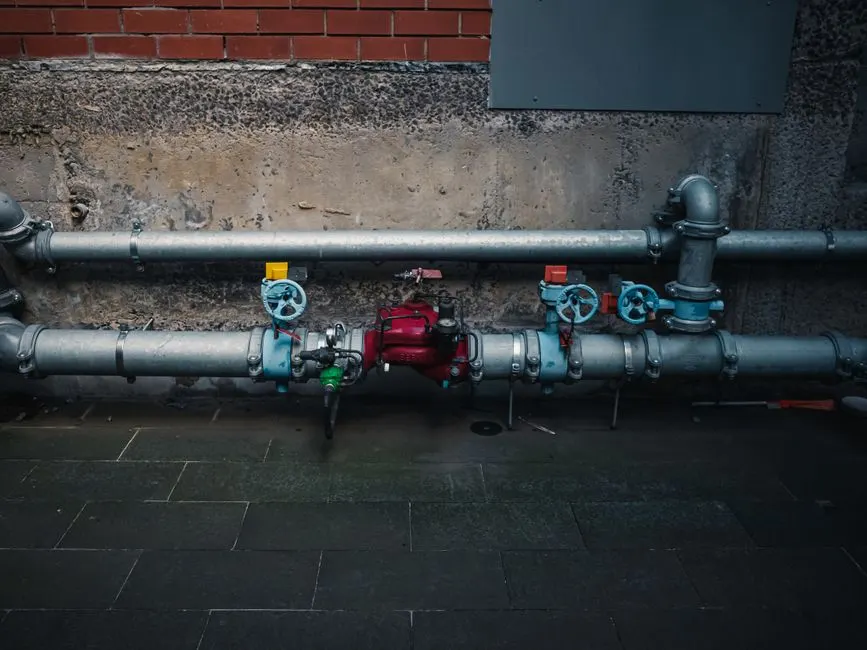
You prevent frozen pipes in Decatur by keeping the pipes above 32°F, and the three moves that do the most work are insulating exposed pipes, dripping faucets on exterior walls during hard freezes, and disconnecting outdoor hoses before the first cold snap. Decatur's winters swing between 25°F nights and 55°F afternoons, and that freeze-thaw cycle is what cracks copper and bursts CPVC.
Below we cover the temperatures that matter, where Decatur homes actually freeze, what to do when a pipe does freeze, and the mistakes we see most often on emergency calls.
Why Decatur pipes freeze more than you'd expect
Decatur pipes freeze more than you'd expect because most of the housing stock was built before 1970, when code allowed supply lines to run through unheated crawl spaces and exterior walls with little or no insulation. In a 1950s bungalow off plumbing services Oakhurst GA, the kitchen sink line often runs along the north exterior wall with nothing between it and the outside air but a half-inch of siding.
Georgia doesn't require the deep-bury or freeze-protection standards you'll find in Minnesota. That's fine for 360 days a year. It's a problem during the four or five hard freezes Decatur typically gets between December and early March.
We see the same pattern every cold snap: a homeowner wakes up to no water in the master bath, or a wet ceiling under the second-floor bathroom. The pipe didn't fail because it was old. It failed because it was cold and uninsulated.
What temperature do pipes freeze in Decatur?
Water freezes at 32°F, but pipes in Decatur homes start showing stress at 20°F and burst most often between 15°F and 25°F. The burst itself usually happens on the thaw, not the freeze - ice expands, pressure builds behind it, and the crack opens when the ice melts and water rushes back through.
Wind matters as much as the thermometer. A 25°F night with 15 mph wind pulls heat out of an exterior wall faster than a still 20°F night. That's why two houses on the same block can have completely different outcomes.
Our rule of thumb for Decatur: any forecast with an overnight low at or below 28°F for more than four hours is a drip-your-faucets night. Below 22°F, drip every fixture on an exterior wall and open the cabinet doors underneath.
Insulate the pipes that actually freeze
Pipe insulation in Decatur pays for itself the first time it prevents a $400 repair. The materials are cheap - foam pipe sleeves run $2 to $4 for a six-foot section at any Decatur hardware store - and the labor is a Saturday afternoon.
Focus on these locations, in order of how often we find frozen lines there:
- Exterior wall runs under kitchen and bathroom sinks. These are the number-one freeze point in Decatur homes.
- Crawl space supply lines. Especially in older Kirkwood and East Lake houses with vented crawl spaces.
- Garage-adjacent lines. Any pipe running through or along an unheated garage wall.
- Attic runs. Less common here, but we see it in 1990s builds with second-floor bathrooms.
- Hose bibs and their interior shutoffs. The short stub inside the wall is where the split usually starts.
Use closed-cell foam sleeves, not the old fiberglass wrap. Seal the seams with tape. Where a pipe runs through a floor joist or wall plate, pack the gap with spray foam - cold air moving through that gap is what does the damage.
If you'd rather not crawl under the house in January, we handle leak detection Decatur GA and pipe insulation as a single visit. We find the vulnerable runs, insulate them, and check for any existing damage before it becomes a ceiling stain.
Should I drip my faucets in Decatur GA winter?
Yes - drip the faucets on exterior walls any night the forecast drops below 28°F. A slow drip keeps water moving through the line, and moving water takes far longer to freeze than standing water. It also gives expanding ice somewhere to push instead of cracking the pipe.
How much is enough:
- Single drip every 1-2 seconds from the hot and cold side of the most exposed fixture.
- Open cabinet doors under kitchen and bathroom sinks so warm room air reaches the pipes.
- Leave the heat at 58°F or higher overnight, even if you're traveling. A 55°F house with a 20°F night is a frozen-pipe house.
- Drip the fixture farthest from the water heater if you only drip one - that's usually the line with the longest cold run.
What you should not do: leave a faucet running at full stream for hours. That's money down the drain and it doesn't protect anything a drip doesn't. A steady pencil-thin trickle is the maximum you need.
Outdoor and crawl space prep before the first freeze
Outdoor prep takes about 30 minutes and prevents the most expensive category of winter damage. Do this in late November, before the first hard freeze, not the night of.
Disconnect every garden hose from every spigot. A hose left connected traps water in the bib and the stub behind it - that's the single most common cause of a split hose bib we see in Decatur. Drain the hose, coil it, and store it in the garage.
If you have a sprinkler system, blow it out with compressed air or have it done. Standing water in a zone line will crack the pipe at the lowest point, and you won't know until you turn the system on in April.
Close the crawl space vents. Vented crawl spaces are designed to breathe in summer; in winter they pull cold air directly across your supply lines. Foam board cut to fit and held in place with a brick works fine.
If you're heading out of town for the holidays, shut off the main water valve and drain the lines by opening the lowest faucet in the house. That's the single best protection against a pipe that bursts while you're 400 miles away.
What to do if pipes freeze Decatur Georgia
If a pipe freezes in Decatur, the first move is to shut off the main water valve and open the nearest faucet so melting water has somewhere to go. Do not use a torch, a heat gun on high, or boiling water - a rapid temperature change cracks copper and can start a fire in a wall cavity.
Here's the sequence we walk homeowners through on the phone:
- Shut off the main. The valve is usually at the meter box near the street or where the line enters the house.
- Open the affected faucet. Both hot and cold. This relieves pressure as the ice melts.
- Warm the pipe slowly. A hair dryer on low, a space heater pointed at the cabinet, or towels soaked in warm (not boiling) water.
- Work from the faucet back toward the frozen section. Never start in the middle.
- Watch for leaks. Once water flows, check the whole run for drips. The crack may already be there.
If you can't find the freeze point, or if you see water where it shouldn't be, stop and call us. Our frozen pipe repair Decatur team handles thawing and repair in one visit, and we can usually tell you on the phone whether it's a DIY job or not.
Common mistakes that lead to burst pipes
The mistakes that lead to burst pipes are almost always about timing or heat, not about bad luck. Here's what we see most often on winter calls around Decatur.
- Waiting until the night of the freeze to prep. Insulation and hose disconnection need to happen days ahead, not at 9 p.m. when the temperature is already dropping.
- Turning the heat down too far while traveling. A 50°F house during a 20°F week is a frozen-pipe house. Keep it at 58°F minimum.
- Leaving the garage door open. If a supply line runs along the garage wall, an open door on a cold night is the same as leaving the pipe outside.
- Using a torch to thaw a pipe. We've seen two house fires in Decatur from this. Don't.
- Ignoring a slow drain in winter. A partially clogged line freezes faster because there's less flow. If your kitchen sink is draining slowly in December, get it cleared.
- Assuming the pipe is fine because water is running. A cracked pipe can hold pressure for weeks before it fails. If you had a freeze event, have the line inspected.
That last one is worth repeating. A pipe that froze and thawed without bursting may still have a hairline crack. It'll weep slowly into a wall cavity, and you won't notice until the drywall sags. If you had a hard freeze and any fixture lost pressure, call us for a check.
When to call a professional
Call a professional when you can't find the frozen section, when you see water anywhere it shouldn't be, or when the freeze involves a line inside a wall or under a slab. Those are the cases where a DIY thaw turns into a $3,000 repair.
We also get called for the less dramatic stuff: a hose bib that won't stop dripping after a freeze, a water heater that's struggling to keep up in cold weather, or a crawl space that needs proper insulation before the next cold snap. If you're not sure whether your setup is vulnerable, we'll come look. No charge for the assessment on a winterization visit.
If your water heater is the weak link - and in a lot of Decatur homes it is, especially units over 10 years old - cold weather makes an existing problem worse. We handle water heater repair Decatur GA and can tell you in one visit whether a repair or replacement makes more sense.
And if you're dealing with a slow drain that's making a freeze worse, our drain cleaning Decatur GA team can clear it before the next cold front. A flowing line freezes far less often than a sluggish one.
Frequently Asked Questions
How do I prevent frozen pipes in Decatur GA?
Insulate exposed pipes in crawl spaces and exterior walls, disconnect outdoor hoses by late November, drip faucets on exterior walls any night below 28°F, and keep your thermostat at 58°F or higher. Close crawl space vents and shut off the main if you're traveling.
What temperature do pipes freeze in Decatur?
Water freezes at 32°F, but Decatur pipes typically burst between 15°F and 25°F, especially with wind. Any overnight low at or below 28°F for four or more hours is when you should drip faucets and open cabinet doors.
Should I drip my faucets in Decatur GA winter?
Yes, on any night below 28°F. A drip every 1-2 seconds from the hot and cold side of the most exposed fixture keeps water moving and relieves pressure. Open cabinet doors underneath so warm air reaches the pipes.
Who do I call for frozen pipes in Decatur?
Call a licensed Decatur plumber if you can't locate the freeze, if water is running where it shouldn't be, or if the frozen line is inside a wall or under a slab. We handle thawing and repair in one visit.
How much does frozen pipe repair cost in Decatur?
Typical 2026 pricing in Decatur runs $250 to $600 for a single accessible pipe repair, and $800 to $2,500 or more if the line is inside a wall or under a slab. Burst pipes with water damage add drywall and flooring costs on top.
Get help with Plumber Decatur in Decatur
If you'd rather not spend a January night under the house with a hair dryer, we'll handle the winterization for you. Our team insulates the vulnerable runs, checks for existing freeze damage, and gets your plumbing ready for the next cold snap.
Call us at 513-299-2719 and we'll schedule a winterization visit or come out for a frozen pipe emergency.